
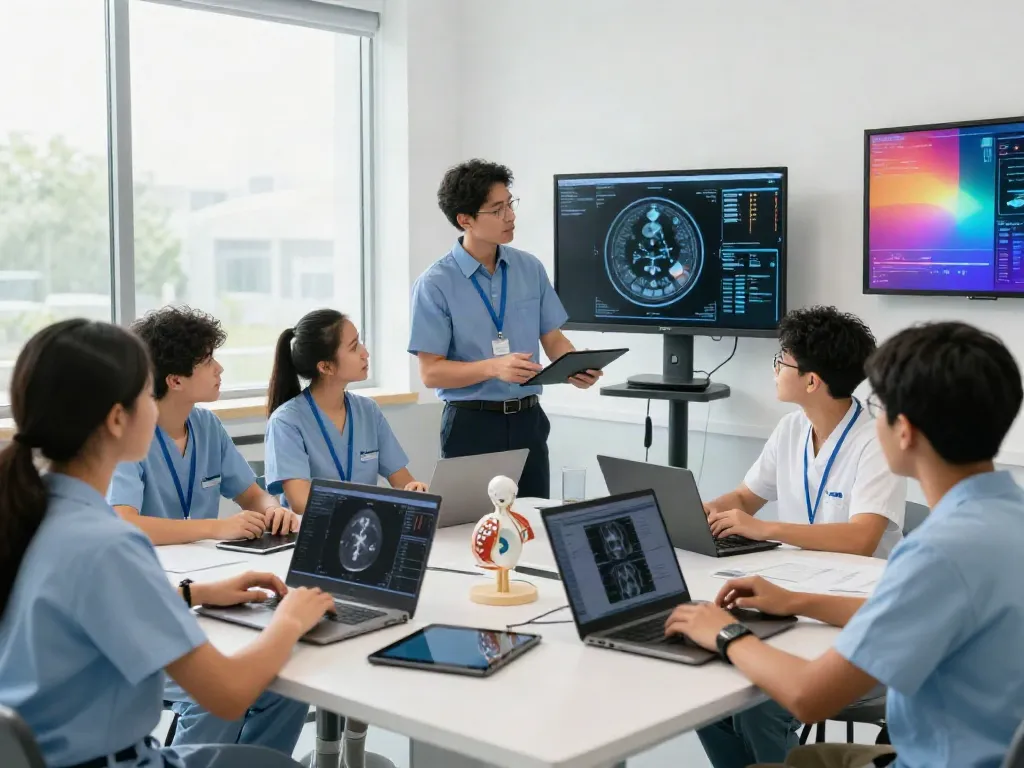
Introduction to ROKOK88 and Its Educational Purpose
In the ever-evolving landscape of medical technology, understanding imaging techniques such as CT scans, X-rays, and MRIs is crucial for both healthcare professionals and patients alike. ROKOK88 serves as an essential educational platform that demystifies these complex modalities, making them accessible to a wider audience. By leveraging a systematic approach to learning, ROKOK88 enhances knowledge retention and comprehension, allowing users to navigate the intricacies of modern radiology with confidence. When exploring options, rokok88 provides comprehensive insights into the educational materials available on CT scans, X-rays, and MRIs.
What is ROKOK88?
ROKOK88 is an educational initiative designed to improve the understanding of medical imaging techniques. It offers a range of resources that cater to students, healthcare professionals, and anyone interested in gaining a deeper appreciation for radiology. The materials provided are well-structured and user-friendly, ensuring that learners at all levels can benefit from them.
Importance of Understanding CT Scans, X-Rays, and MRIs
As technology continues to advance, the relevance of imaging techniques in diagnosing and treating medical conditions grows. CT scans, X-rays, and MRIs are pivotal in providing insights that inform treatment decisions. Understanding these modalities is essential for healthcare providers and patients to facilitate informed discussions about diagnoses and treatment plans.
How ROKOK88 Improves Learning Outcomes
By providing clear explanations and engaging content, ROKOK88 fosters a learning environment conducive to mastering complex subjects. The platform's structured approach encourages users to explore topics at their own pace, improving overall learning outcomes.
Technical Insights into CT Scans
Principle of CT Scanning Technology
CT scans, or computed tomography scans, utilize a series of X-ray images taken from different angles around the body and use computer processing to create cross-sectional images or slices of bones, blood vessels, and soft tissues inside the body. This imaging technique provides more detailed information than traditional X-rays and is instrumental in diagnosing various health issues.
Common Uses of CT Scans in Diagnosis
CT scans are used in numerous medical applications, including:
- Assessing traumatic injuries
- Detecting tumors or abnormalities
- Guiding biopsies
- Monitoring the progress of certain diseases
- Evaluating complex bone fractures
Future Developments in CT Imaging
The future of CT imaging looks promising with developments like faster scanning times, lower radiation doses, and advanced image reconstruction techniques that enhance image quality. Research is ongoing to incorporate AI and machine learning in CT diagnostics to improve accuracy and efficiency in healthcare delivery.
Exploring X-Ray Imaging Techniques
How X-Rays Work: A Simplified Explanation
X-rays work by passing a controlled amount of radiation through the body. Different tissues absorb varying amounts of radiation, which creates an image on a film or digital sensor. Dense structures like bones appear white on the X-ray, while softer tissues appear in shades of grey, allowing for detailed assessment of internal structures.
Comparative Analysis of X-Ray vs. CT
While both X-rays and CT scans utilize radiation to create images, they differ significantly in their capabilities:
- X-rays provide a two-dimensional view, whereas CT scans offer three-dimensional images.
- CT scans are more effective in visualizing complex structures, particularly in the abdomen and pelvis.
- X-rays typically involve lower radiation doses compared to CT scans.
Innovations in X-Ray Technology for 2026
Emerging technologies in X-ray imaging, such as digital radiography and portable X-ray machines, promise to enhance accessibility and efficiency in diagnostics. These innovations are especially beneficial in emergency settings and rural healthcare facilities, where timely imaging can significantly impact patient outcomes.
The Role of MRI in Modern Healthcare
Understanding Magnetic Resonance Imaging
Magnetic Resonance Imaging (MRI) employs powerful magnets and radio waves to produce detailed images of organs and tissues without the use of ionizing radiation. MRI is particularly effective at capturing images of soft tissues, making it invaluable for diagnosing conditions in the brain, muscles, and ligaments.
Benefits of MRI over Traditional Imaging
MRIs offer numerous advantages, including:
- No exposure to ionizing radiation
- Superior soft tissue contrast
- Capability to visualize intricate structures in high detail
- Non-invasive procedure with minimal risks
Advancements in MRI for Patient Care
The field of MRI continues to evolve, with advancements in scanner technology and techniques like functional MRI (fMRI) that measure brain activity by detecting changes associated with blood flow. These innovations enhance the diagnostic potential of MRIs, allowing for more precise evaluations of various medical conditions.
Conclusion: The Future of Radiology Education with ROKOK88
Summarizing Key Learning Points
Understanding the fundamentals of CT scans, X-rays, and MRIs is crucial for effective healthcare. ROKOK88 provides extensive educational material that elucidates these complex topics, facilitating better comprehension for both professionals and patients.
How ROKOK88 Can Enhance Medical Training
As the medical field grows increasingly complex, resources like ROKOK88 are indispensable for training future healthcare providers. By utilizing platforms that explain the intricacies of medical imaging, educators can better prepare students to face real-world challenges in diagnostics and patient care.
FAQs about ROKOK88 and Radiology
What are the main topics covered in ROKOK88?
ROKOK88 covers a wide array of subjects within the realm of radiology, focusing on CT scans, X-rays, MRIs, and their respective roles in medical diagnosis and treatment.
How can I apply ROKOK88 in practical scenarios?
The knowledge gained from ROKOK88 can be applied in various healthcare settings, enhancing patient interactions, improving diagnostic accuracy, and fostering a collaborative environment among healthcare professionals.
What future trends should we expect in medical imaging?
Future trends in medical imaging include enhanced imaging technologies, integration of AI for improved diagnostics, and a greater emphasis on patient-centered approaches that prioritize safety and comfort during imaging procedures.